By Jess Ponting
Over the past decade, Surf Park Central has been quietly building one of the most detailed consumer datasets in the surf park industry, drawing on thousands of surfers and surf park users across multiple geographies, technologies, and operating models. Our surveys have shown strong growth in the percentage of respondents who have used a surf park, which almost doubled between 2016 (26%) and 2025 (51%).
Breakdown of Surf Park Central Survey Respondent Demographics 2015-2025
Close observers of the surf park industry will note that early, minimalist surf park business models are increasingly giving way to metro-adjacent mixed-use developments and projects anchored by residential real estate, where access to the surf park is bundled within private club memberships alongside a broader set of recreation and leisure amenities. While year-over-year changes in metrics such as travel time, dwell time, membership uptake, and repeat visitation are incremental rather than dramatic, taken together, they provide insight into how surf park usage is beginning to evolve.
For much of the surf park industry’s early history, demand analysis centered on whether enough people would visit to make surf parks viable at all. With that question effectively settled, a more consequential question is whether emerging usage patterns align with the projects moving through the development pipeline.
Recent Surf Park Central consumer data suggests that this alignment is beginning to take shape and offer early insight into the direction the industry is likely to move next.
Decreasing Travel Times are an Early Signal
The travel times respondents reported being willing to endure in order to surf at a surf park increased dramatically between 2015 and 2016. This shift is widely attributed to the “Surf Ranch effect.” Following the release of KSWaveCo’s first Surf Ranch prototype video on December 18, 2015, acceptance of surf parks accelerated across multiple metrics in our surveys. Willingness to drive two or more hours to a surf park bumped up again in the post-pandemic period and remained relatively stable through 2023, but has since begun to decline. This decline is likely a function of the surge in new openings around the world, putting surf parks closer to actual and potential users.
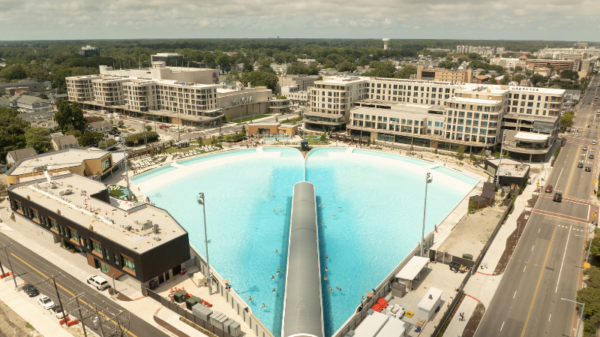
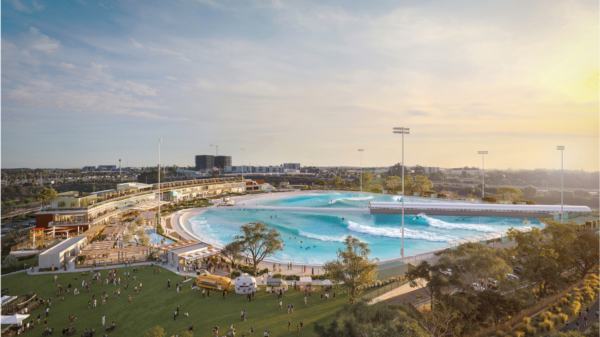
A growing proportion of projects in the development pipeline are embedded within large population centers, residential real estate developments, and larger mixed-use environments, as opposed to relatively isolated destination facilities centered primarily on a surf lagoon with limited supporting amenities. This structural shift alone could be expected to produce incremental reductions in average travel time, and our most recent data is directionally consistent with that assertion. Essentially, shorter travel times reduce friction, which supports higher visit frequency, and frequency is the foundation on which memberships, private clubs, and community-based operating models are built.
Dwell Times and the Normalization of Use
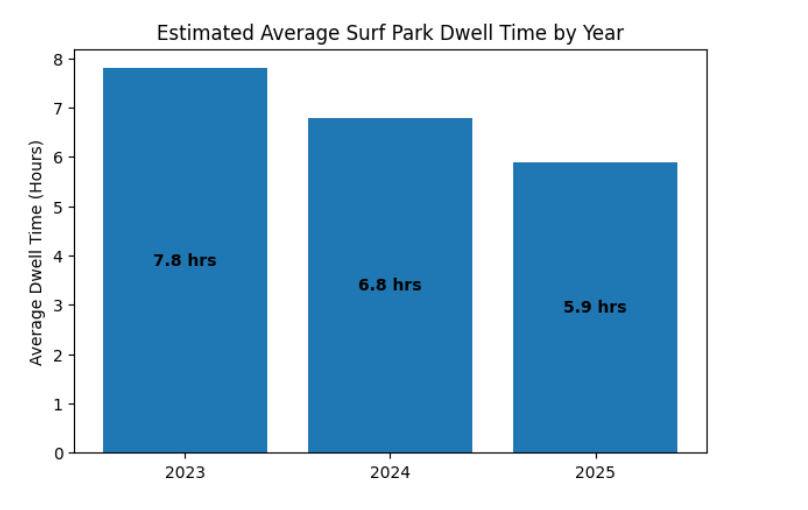
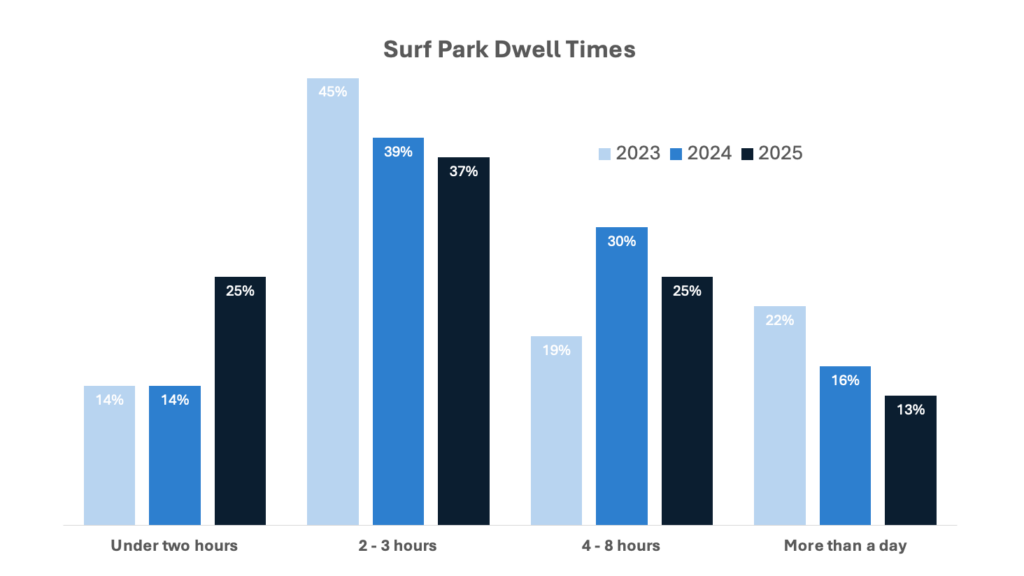
Dwell times show a similar incremental decline to travel times, but I don’t think this should be interpreted as reduced engagement. In mature leisure industries, shorter dwell times often reflect normalized, routine use rather than diminished value. The downward trend instead points to a compositional shift in how people use surf parks. The share of very long stays (“more than a day”), which has historically pulled average dwell times upward, is declining. At the same time, the 4–8 hour category grew by 60% from 2023 to 2024 and, despite a modest correction in 2025, remains elevated at 32% above 2023 levels.
This pattern is important: it indicates that surf parks are increasingly supporting half-day, high-value visits—long enough to drive meaningful food & beverage, retail, and ancillary spend, but short enough to fit into a local or regional outing rather than a destination trip. In other words, average dwell time is compressing because extreme long stays are fading. The growth of the 4–8 hour segment points to surf parks settling into a “core activity within a broader mixed-use experience” role. The extreme long stay segment may come back into play as resort-style surf parks with hotels and amenities aimed at attracting multiple-day stays increasingly come online.
The growth in the ‘under two hours’ dwell time segment is commercially significant because this is a usage pattern that supports stronger lifetime value: customers who can justify a quick visit are more likely to return often, experiment with different session types, and commit capital upfront through memberships and bundled products. As surf parks become more accessible and more familiar, brief visits act as the on-ramp to repeat usage, providing the behavioral foundation for further growth in pre-paid access, subscriptions, and loyalty-driven revenue models.
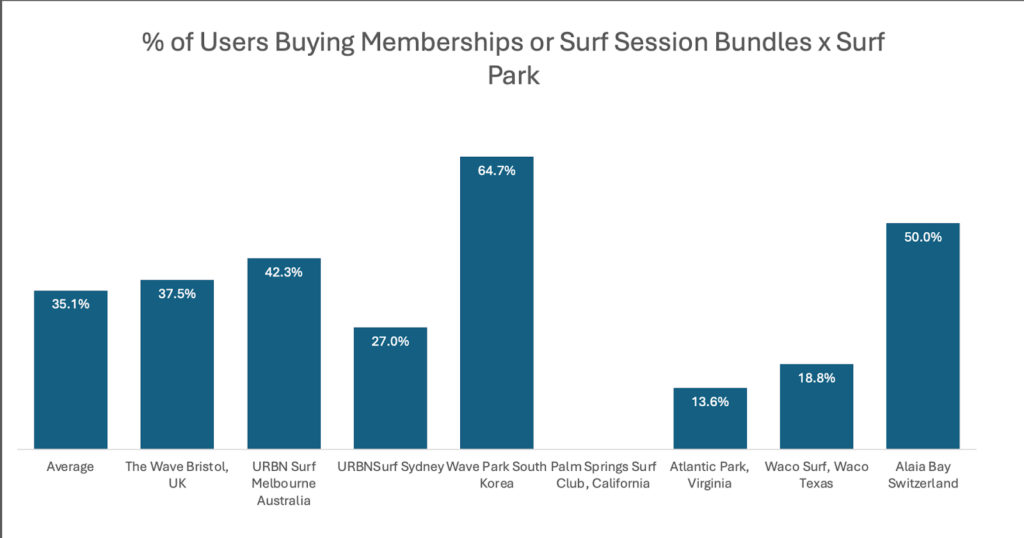
Thirty-five percent of surf park visitors report purchasing memberships or bundled products, up five percentage points year-over-year. A breakdown of membership and bundling across different surf parks demonstrates that for most urban surf parks, at least 25% of their users are purchasing bundles or memberships, up to 64% in WavePark South Korea and 50% in Alaia Bay, Switzerland.
This level of membership uptake in the consumer data goes a long way to validating the assumption that a segment of the market is ready for a private club and residential real estate style model. Repeat visitation data reinforces this point. While the median number of visits remains low, a substantial minority of surf park users report frequent engagement with 27% visiting six or more times annually, and more than 20% visiting ten or more times annually.
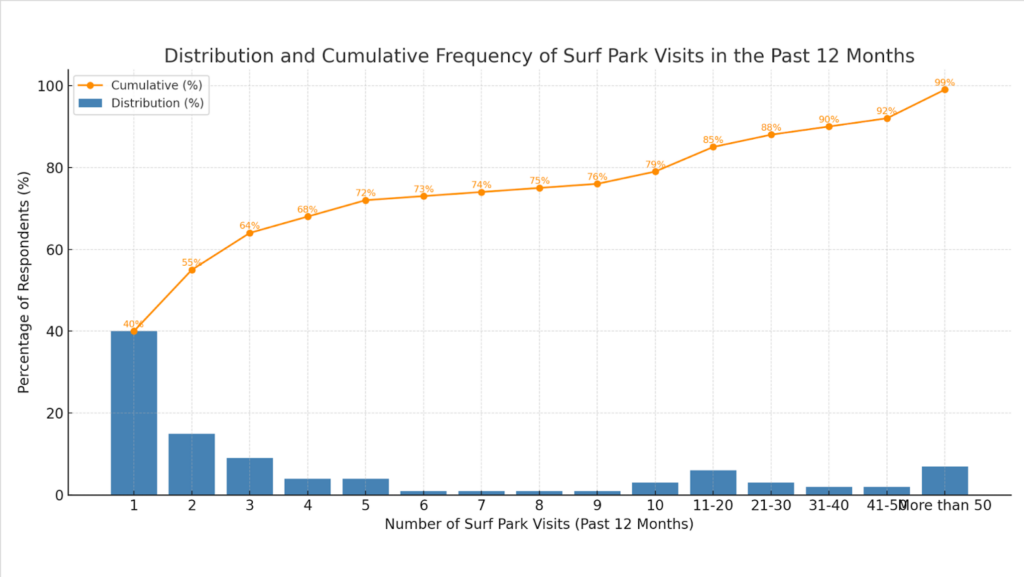
Private clubs and residential surf parks do not require universal adoption to succeed. They require a reliable base of repeat users who value access, consistency, and belonging. The data suggests that the base already exists—and is growing.
Intent to Return and the Formation of “Home Parks”
In 2025, 58% of all survey participants said they are likely or very likely to visit a surf park in the next 12 months, representing a 21% increase from 2024. Among respondents who had visited a surf park in the previous year, that figure rises to an average of 85%, with intent to return ranging from 97% at Atlantic Park to 65% at Waco Surf. While this does not constitute definitive proof of long-term loyalty, it is a strong indicator of growing comfort, familiarity, and reduced uncertainty. As more surf parks open closer to where people live, these patterns of “home park” usage are likely to continue emerging and strengthening.
Taken together, the data presents a coherent and increasingly consistent picture of gradual demand evolution aligning with structural change on the supply side. Incremental reductions in travel and dwell times, growth in both very short and half-day visits, rising membership uptake, and strong intent to return all suggest that surf parks are beginning to function less as occasional destinations and more as embedded components of broader leisure, real estate, and community ecosystems. These usage patterns closely reflect the business models now dominating the development pipeline: private clubs; surf-anchored residential projects; and large-scale mixed-use developments where surfing is a central amenity rather than a standalone attraction.
For developers and operators, the implication is not that legacy models disappear, but that the basis of performance is shifting. Projects, pricing strategies, and operating models should prioritize repeat use, local demand, and membership economics. The data suggests that the surf parks most likely to outperform in the next phase of industry growth will be those designed to become true “home parks” for significant proportions of their user base: places these people return to frequently, integrate into their routines, and commit to financially over time.










You must be logged in to post a comment Login