By Jess Ponting
Surf Park Summit is returning to Virginia Beach Sept. 1 through 3. As such, it seems timely to discuss the thinking behind the themes underpinning Summit 2026, which are informed by the continued explosive growth of the industry across multiple wave technologies, business models and geographies, and the market evolution and trends we have observed over the past 12 months.
Surf Park Summit 2026 is built around the increasingly large cadre of surf park professionals who have navigated approvals, survived construction, reconciled spreadsheets with reality, hired an entire workforce, set up bookings systems, enacted water rescues, rented out retail spaces, built out residential real estate, sold high end memberships, and accumulated real-world surf park experience that just didn’t exist even a few years ago. The content directly reflects the changing patterns, challenges, and emerging strategies identified by industry leaders who are working with performance data, operational constraints, and capital at risk.
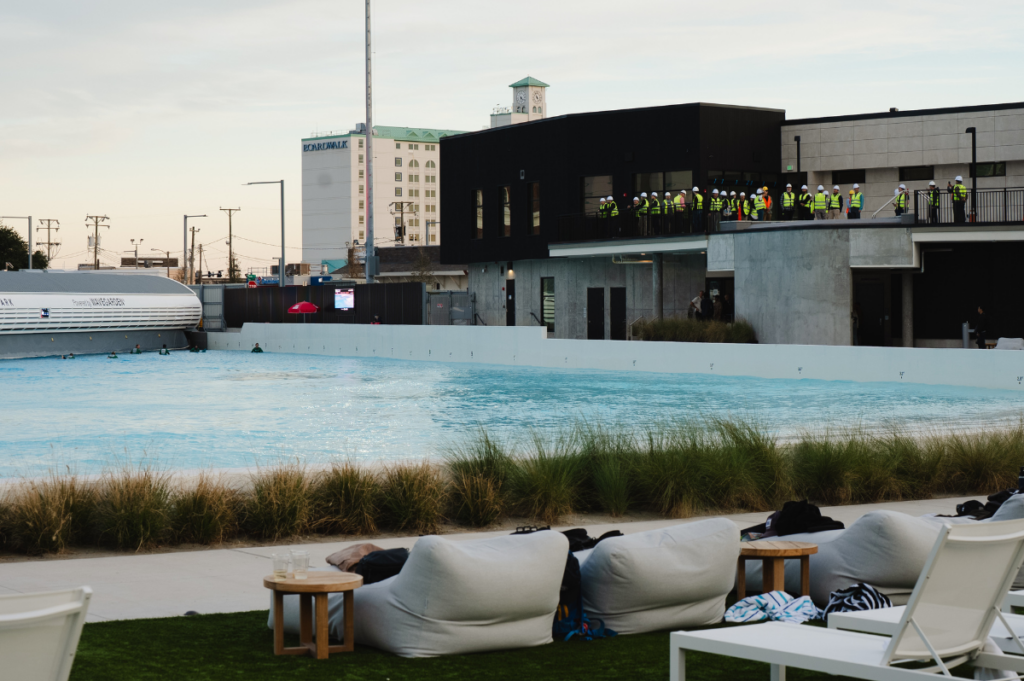
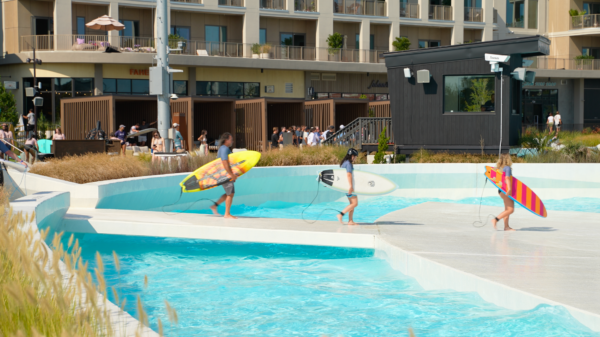
Beyond the core program of panels and presentations, this year’s Surf Park Summit expands into a more immersive, working format. Atlantic Park Surf will host on-site activations. Developer workshops and operator committee meetings will create space for deeper, closed-door discussions on shared challenges—from operational performance to safety and sustainability. Wave generation lightning rounds provide a complete overview of dynamic and standing wave technologies. Surf Park Sharks returns as a platform for emerging projects to connect with capital, while the Surf Park Awards introduce a new People’s Choice category for Exhibitor of the Year, opening the door to broader industry participation.
These additions signal a move toward engaging more deeply with the realities of building and operating surf parks with a diversity of surf park stakeholders. The content itself reflects this same evolution. We have derived a core set of five themes derived from recent trends in the industry to inform the structure and topics discussed in panels, keynotes, and working sessions this year. These themes are as follows:
- Business Models, Revenue Strategy, and Yield Optimization
The variety of business models currently being explored across the industry is a reflection of how context-dependent projects are. Membership models alone span a wide spectrum, from fully private clubs to hybrid systems to open-access parks, each with different implications for revenue predictability, utilization, and guest experience. Memberships are also functioning as a financing tool, with pre-sales used to validate demand and raise early capital. That strategy can stabilize a project before opening, but it can also introduce long-term constraints if not carefully structured.
Overlaying all of this is a more fundamental issue: wave capacity is fixed, and how it is programmed and priced determines how a park performs. New approaches align session types, pricing, and demand with greater precision. Maximizing yield per wave-hour without eroding the experience itself is where theory meets reality.
- Surf Parks in Real Estate and Capital Strategy
Surf parks are increasingly being deployed as anchor amenities within larger real estate developments. In these contexts, their value is distributed across residential pricing, retail space rental, absorption rates and broader project differentiation, and decisions around access, pricing, and phasing become tightly linked to real estate strategy.
At the same time, developers are blending equity, debt, memberships, and presales in more deliberate ways, while also navigating the expectations of investors who are becoming more familiar with the risks and timelines involved. The interplay between capital strategy and project design is becoming more explicit and more light is shed on how the structure of project financing shapes how it is built, operated, and positioned in the market.
- From Entitlements to Construction—Getting Projects Delivered
A more nuanced understanding of where delays, risks, and inefficiencies actually occur across the development process. Increasingly, as opposed to a discrete milestone to be achieved, approvals are being treated as an ongoing process of alignment where sustaining momentum requires projects to engage early, respond to concerns with credible data and design adjustments, and navigate entitlement pathways with a realistic view of timing and complexity. The transition from approvals into construction can be viewed as its own critical inflection point requiring coordination between developers, designers, engineers, and contractors to preserve alignment.
- Design, Operations, and Safety as an Integrated System
Effective projects align design, operations, and safety from the outset, embedding the intended business model (e.g., private club, high-throughput attraction, or mixed-use anchor) directly into the physical layout. Circulation patterns, amenity placement, and wave allocation influence efficiency, staffing, and guest experience on a daily basis. Where alignment exists, parks tend to operate more smoothly and predictably.
The combination of water-based activity, mechanical systems, and high user volumes creates a risk environment that demands consistency and rigor. Over the past year, operators have increasingly focused on refining protocols, strengthening staff training, and incorporating safety considerations into both layout and operational flow. Long-term performance is in part a function of how effectively design, operations and safety function as an integrated system.
- Closing the Gap Between Projections and Performance
Early assumptions around utilization, pricing, and demand often prove incomplete once exposed to real conditions. Experienced operators actively work to close these gaps by adjusting programming, refining pricing strategies, and recalibrating expectations based on observed performance. This iterative process is one of the industry’s most valuable sources of knowledge. It is also one of the least visible, as it requires a willingness to interrogate assumptions and share lessons that are not always flattering. Summit 2026 explicitly creates times and spaces for that exchange, bringing together operators and developers with a view to improving outcomes across the industry over time.
Why Attend Surf Park Summit 2026?
Surf Park Summit 2026 is a working environment for an industry being built in real time with real benefits for many stakeholders. For developers, the value is clarity. The difference between a project that moves efficiently and one that stalls often comes down to decisions made early—around entitlements, capital structure, design alignment, and community engagement. The Summit brings together people who have navigated those decisions recently and who can speak to what holds up under pressure and what does not.
For operators, the focus is on performance. Experienced operators know that the challenge is not opening day, it is sustaining utilization, refining programming, managing risk, and improving yield over time. The ability to compare approaches, share operational insights, and pressure-test assumptions with peers is quickly becoming one of the most valuable contributions of Surf Park Summit to the growing community of surf park operators.
For investors, the opportunity is prospective. Surf parks are still a relatively new asset class, but they are no longer untested. Understanding how projects are being structured, where returns are being realized, and how risk is being managed across different markets provides a clearer lens on where capital can be deployed effectively and where caution is warranted.
For suppliers and service providers, the Summit is where demand becomes tangible. As projects move from concept to construction to operation, the need for specialized expertise continues to expand. Being in the room where developers, operators, and investors are actively shaping projects offers a direct line into how the industry is evolving and where opportunities are emerging. Major deals are done every year at Surf Park Summit.
The surf park industry is entering a phase where decisions carry more weight, capital is moving with greater intention, and operational performance is becoming the defining metric of success. Surf Park Summit 2026 sits at the center of that shift as a place and time to learn from experienced industry peers where things are actually going, and to play a role in shaping what comes next.








You must be logged in to post a comment Login