By Jess Ponting
This Surf Park Summit panel on “Optimizing Surf Park Operations: Efficiency, Profitability & Scaling” surfaced a clear and consistent message: surf parks are no longer experimental attractions. They are operational businesses that demand discipline, adaptability, and strategic clarity.
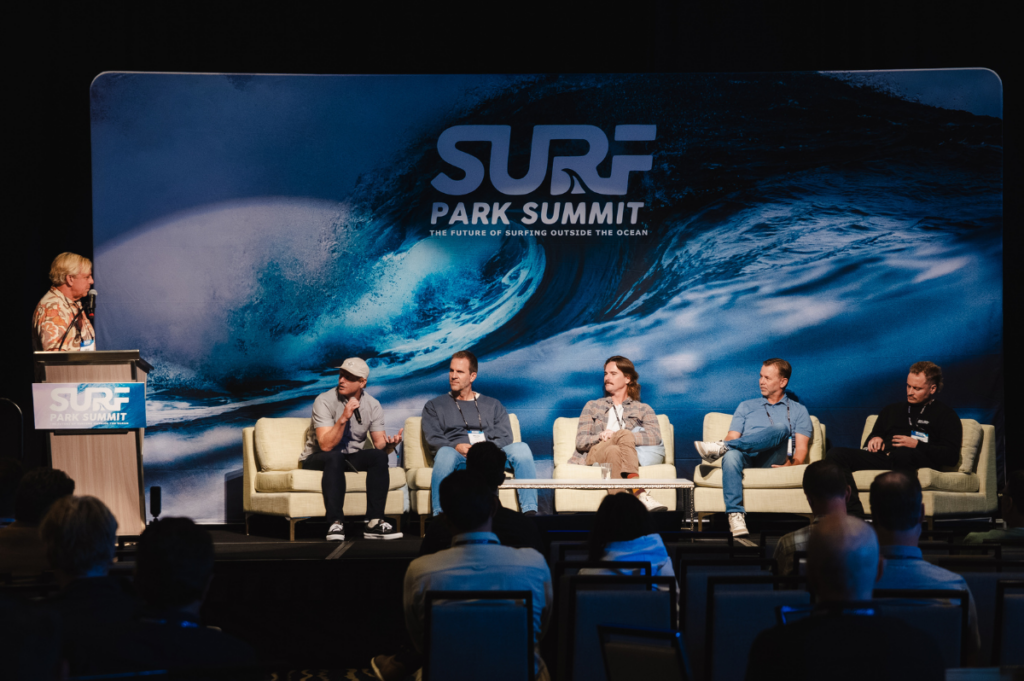
Across operators from Surftown MUC, Alaïa Bay, Palm Springs Surf Club, Atlantic Park, and Waco Surf, the conversation revealed an industry transitioning from proving the concept to refining the model. What follows is a structured synthesis of the most important operational insights.
Speakers:
- Mark “Skip” Taylor – Partner at Surf Park Management
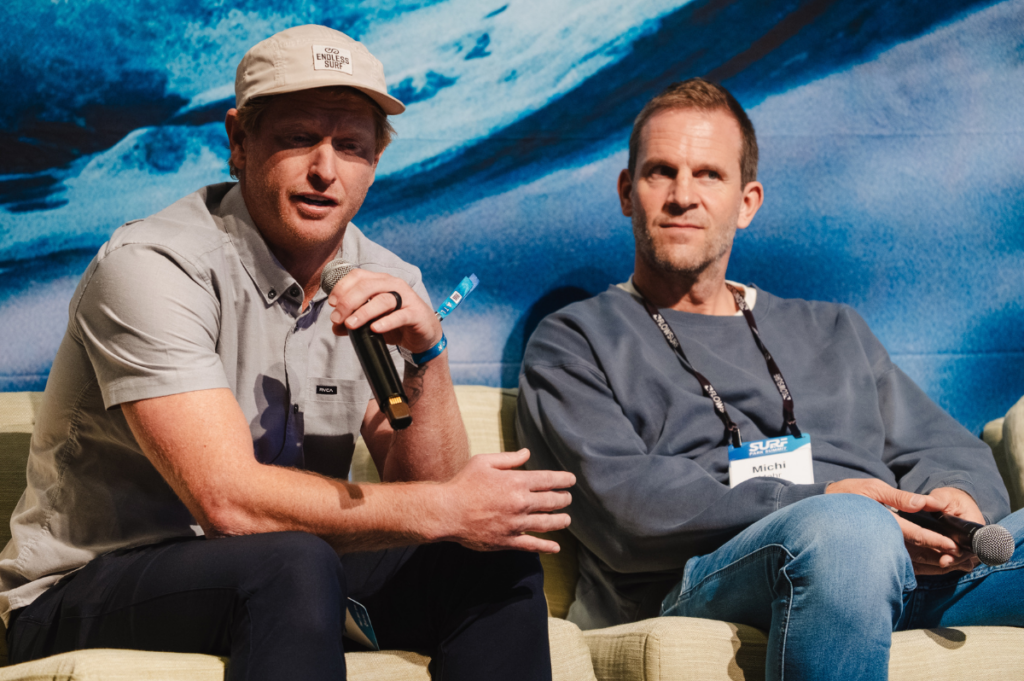
- Michi Mohr – Co-founder of O₂ SURFTOWN MUC
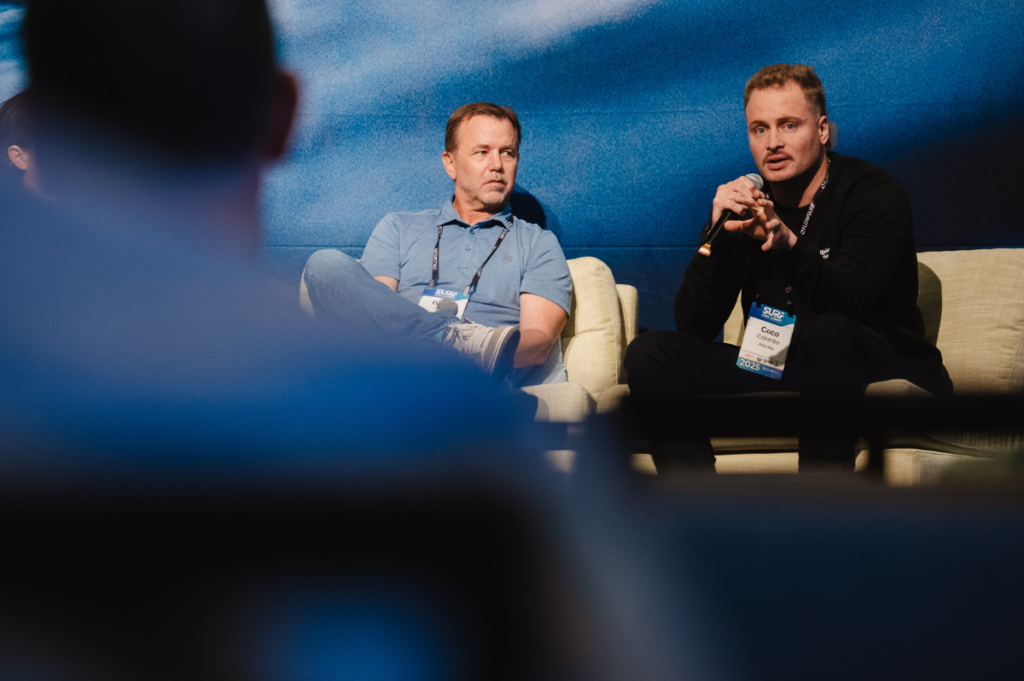
- Coco Colombo – Operations & Experience Manager at Alaïa Bay
- Cheyne Magnusson – Surf Design and Operations Manager at Endless Surf
- Blake Hess – Chief Operating Officer of Beach Street Operations
- Michael Schwaab – Consultant in the surf park space
Strategic takeaways:
Revenue Diversification Is the Core Business Model
Operators emphasized that surf revenue alone is insufficient to sustain a surf park. Historically, many have targeted keeping surf-generated income at or below 50% of total revenue to reduce risk and volatility.
To achieve this, parks are building layered revenue streams that include food and beverage, retail, lessons, memberships, events, and sponsorships. These streams are not peripheral—they are central to financial performance.
The key shift is conceptual. Rather than maximizing revenue per surf session, operators are increasingly focused on maximizing total spend per guest visit. This reframes the surf park from a single-activity venue into a multi-experience destination.
Strategic Insight:
The most successful surf parks are not optimizing wave sales—they are optimizing total guest lifetime value.
Sponsorship Requires Structure, Scale, and Discipline
Sponsorship emerged as a high-potential but resource-intensive revenue stream. Securing meaningful partnerships requires significant upfront effort, including extensive outreach, valuation modeling, and proof of exposure.
Operators highlighted the importance of quantifying visibility—for example, leveraging location-based exposure such as air traffic impressions—to justify sponsorship value. However, delivering on those promises requires ongoing activation, reporting, and relationship management.
Importantly, sponsorship introduces constraints. Exclusive agreements can limit future opportunities, and misaligned partnerships can undermine brand credibility.
Strategic Insight:
Sponsorship only works at scale when it is treated as a managed product with dedicated resources—not as opportunistic revenue.
Events Are Both a Revenue Engine and a Demand Driver
Events play a dual role in surf park operations. Large-scale, sponsor-backed events generate direct revenue and exposure, often with partners handling production and logistics. At the same time, smaller, community-focused events contribute to long-term engagement and retention.
A critical insight from operators is that events drive revenue beyond the event itself. Training demand in the lead-up to competitions can significantly increase session bookings, creating a halo effect around the event.
Additionally, non-surf events—such as music festivals and private activations—are emerging as powerful revenue drivers, sometimes outperforming surf-focused programming.
Strategic Insight:
The highest-performing surf parks are those that can program their facilities as multi-use venues, not just surf destinations.

Membership Models Create Both Revenue and Advocacy
Membership programs are proving effective in generating early-stage capital and building a committed user base. In some cases, memberships have sold out prior to opening, providing immediate financial support during development.
Beyond direct revenue, members serve as ambassadors. They bring guests, promote the facility organically, and contribute to a sense of community that enhances retention and repeat visitation.
Tiered membership structures allow operators to segment the experience, offering premium amenities and exclusivity to higher-value customers.
Strategic Insight:
Membership is not just a pricing strategy—it is a mechanism for embedding the surf park within a self-reinforcing community.
Market Expansion Depends on Creating New Surfers
Operators acknowledged a fundamental constraint: the global population of experienced surfers is limited. To achieve growth, surf parks must expand beyond this base.
This requires a deliberate focus on beginner experiences and progression pathways. By introducing new participants to surfing and supporting their development, operators can convert first-time visitors into repeat customers and long-term users.
This approach not only increases utilization but also expands the total addressable market for surf parks.
Strategic Insight:
The long-term growth of the industry depends less on attracting surfers and more on converting non-surfers into participants.
Throughput and Capacity Management Require Constant Calibration
Maximizing throughput without compromising experience is one of the most complex operational challenges in surf parks. Operators must balance utilization with quality, ensuring that sessions remain enjoyable while maintaining strong revenue performance.
This requires continuous monitoring of demand by skill level and adjusting session offerings accordingly. New session types may need to be introduced as user capabilities evolve, and underperforming products must be replaced quickly.
However, scheduling constraints add complexity. Sessions are often booked weeks or months in advance, meaning that mistakes in programming can have delayed financial impacts.
Strategic Insight:
Throughput is not just about volume—it is about aligning the right product with the right customer at the right time.
Ancillary Revenue Can Become a Liability if Misaligned
While ancillary offerings such as cabanas and premium spaces can generate high margins, their performance is often inconsistent. Operators noted that these assets tend to perform well during peak periods but remain underutilized during off-peak times.
Overinvestment in these features can create pressure to compensate for underperformance elsewhere in the business, often by increasing surf pricing.
This highlights the importance of aligning capital allocation with actual demand patterns rather than perceived value.
Strategic Insight:
Ancillary assets should be demand-driven, not design-driven—otherwise they distort the entire revenue model.
Development and Construction Decisions Have Lasting Consequences
Several operators reflected on the challenges of construction, particularly around sequencing and coordination between different contractors. Poor planning can lead to inefficiencies, rework, and delays that impact both timelines and budgets.
In constrained sites, these issues are amplified, as overlapping activities interfere with each other and slow progress.
These early-stage challenges often carry forward into operations, affecting how efficiently the park can function once open.
Strategic Insight:
Operational efficiency is often determined long before opening—during design and construction, not after.
Crisis Events Are Inevitable—Response Determines Impact
Operators were candid about the inevitability of operational disruptions, including equipment failures and infrastructure issues such as liner damage.
In these situations, financial losses are unavoidable. However, the long-term impact depends on how operators respond.
A consistent theme was the importance of putting the customer first—offering rebookings, providing additional value, and maintaining clear communication.
Handled correctly, even negative events can strengthen customer loyalty.
Strategic Insight:
Crisis management is not about avoiding failure—it is about protecting trust when failure occurs.
Customer Experience Extends Beyond the Session
Surf park visits are often treated as destination experiences rather than casual activities. Guests may travel significant distances and invest time and money into their visit.
As a result, disruptions or poor experiences have a heightened emotional impact. Operators must recognize that they are not just selling sessions, but experiences tied to expectations and memories.
Strategic Insight:
The true product is not the wave—it is the experience surrounding it.
Staff Stability Is a Critical but Underestimated Factor
Operational disruptions also affect staff, particularly hourly employees who rely on consistent income. Extended shutdowns can lead to staff attrition, creating additional challenges when operations resume.
Maintaining team stability requires financial planning and a commitment to supporting employees during difficult periods.
This internal dimension of operations is essential for long-term success but is often overlooked.
Strategic Insight:
A surf park’s ability to deliver consistent experiences depends on retaining the people who operate it.
The Industry Is Entering a More Disciplined Phase
Taken together, these insights point to a broader shift within the surf park industry. The initial phase of development was focused on proving that the concept could work.
The next phase is focused on operational excellence—building systems that can consistently deliver value across a range of conditions.
Success will depend not on who has the best wave, but on who can most effectively integrate revenue generation, cost control, customer experience, and risk management.
Strategic Insight:
The competitive advantage in surf parks is no longer technological—it is operational.
Targeted Takeaways
For Developers
Developers should take away that many of the most consequential decisions affecting long-term performance are made well before opening. The panel repeatedly highlighted how design, sequencing, and capital allocation choices during development directly shape operational outcomes.
- Overbuilding ancillary assets (e.g., cabanas) without validated demand can create long-term revenue pressure
- Construction sequencing and coordination failures lead to delays, rework, and inefficiencies that carry into operations
- Designing for operational flow—guest movement, staffing efficiency, service points—is as important as wave technology
- Early decisions around sponsorship categories and partnerships can limit future flexibility
Key Takeaway:
The operational model is largely “locked in” during development—poor early decisions are difficult and expensive to fix later.
For Operators
Operators are navigating a dynamic environment where constant adjustment is required across pricing, programming, staffing, and customer experience.
- Revenue must be actively managed across multiple streams, not just surf sessions
- Session offerings need continuous refinement based on demand and skill progression
- Events and memberships are critical tools for stabilizing revenue and building community
- Crisis planning is essential—failures will happen, and response determines long-term reputation
- Staff retention during disruptions is a major operational risk that requires planning and financial buffers
Key Takeaway:
Operational success is not about stability—it’s about the ability to continuously adapt while maintaining a consistent customer experience.
For Investors
From an investment perspective, the panel underscored that surf parks are complex operating businesses, not passive real estate or technology plays.
- Revenue diversification is essential to reducing volatility and improving returns
- Sponsorship and ancillary revenues require active management and staffing
- Customer acquisition strategies must include market expansion, not just capturing existing surfers
- Operational disruptions (technical failures, shutdowns) are inevitable and must be priced into risk models
- The quality of the operating team is as important as the underlying asset
Key Takeaway:
Returns are driven less by the wave technology itself and more by the sophistication and execution of the operating model.











You must be logged in to post a comment Login