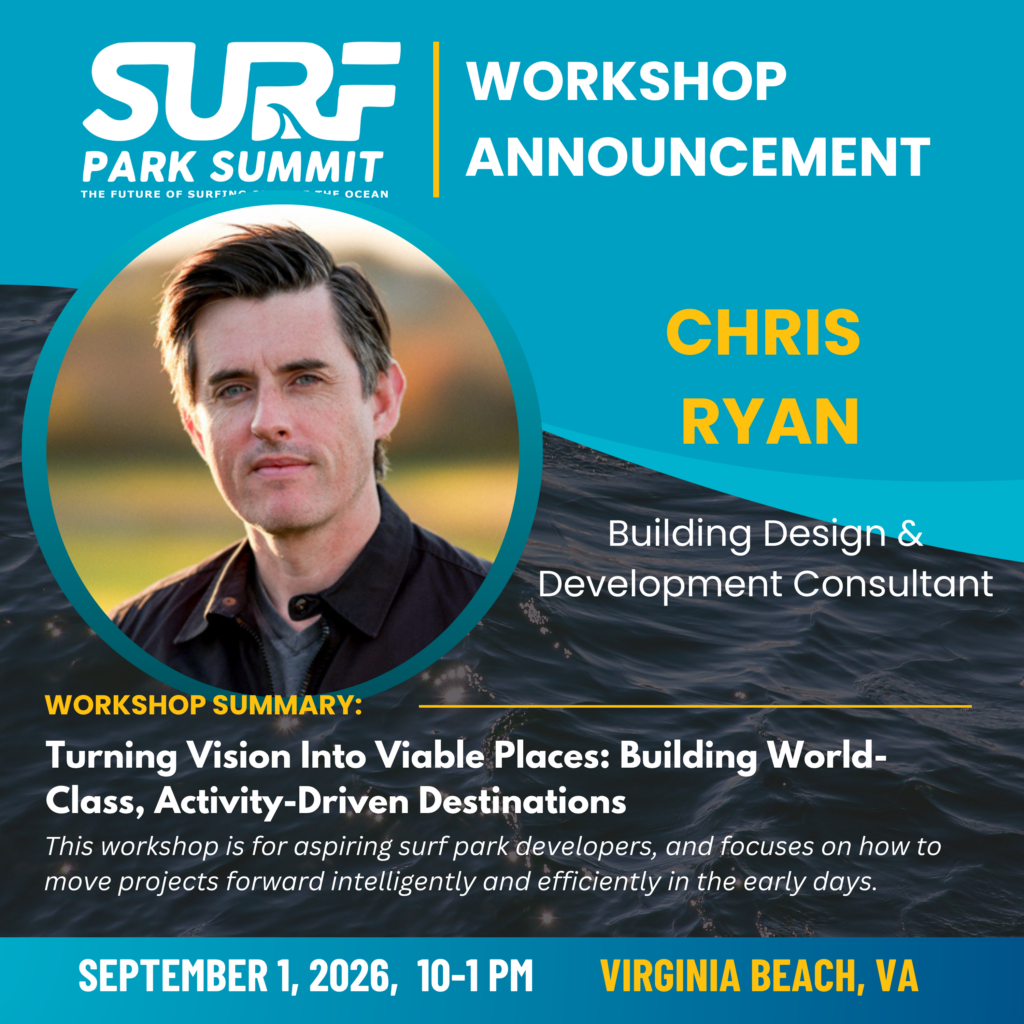
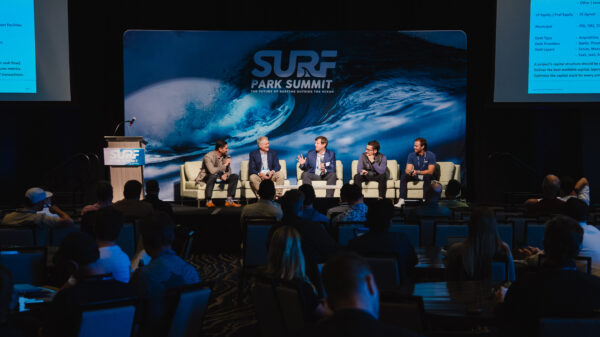
At this year’s Surf Park Summit, attendees will hear from Chris Ryan, an architect and developer who specializes in activity-focused developments.
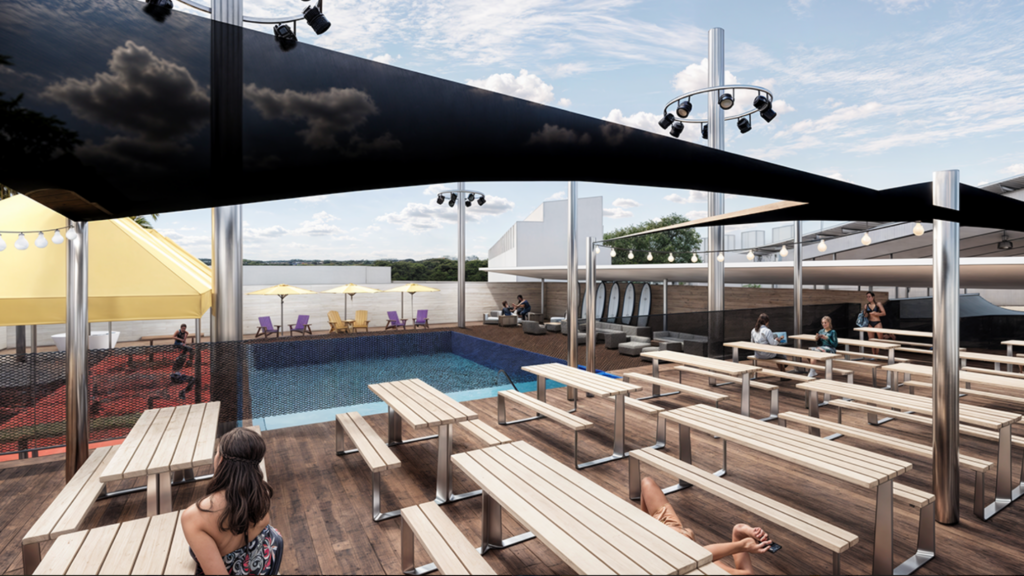
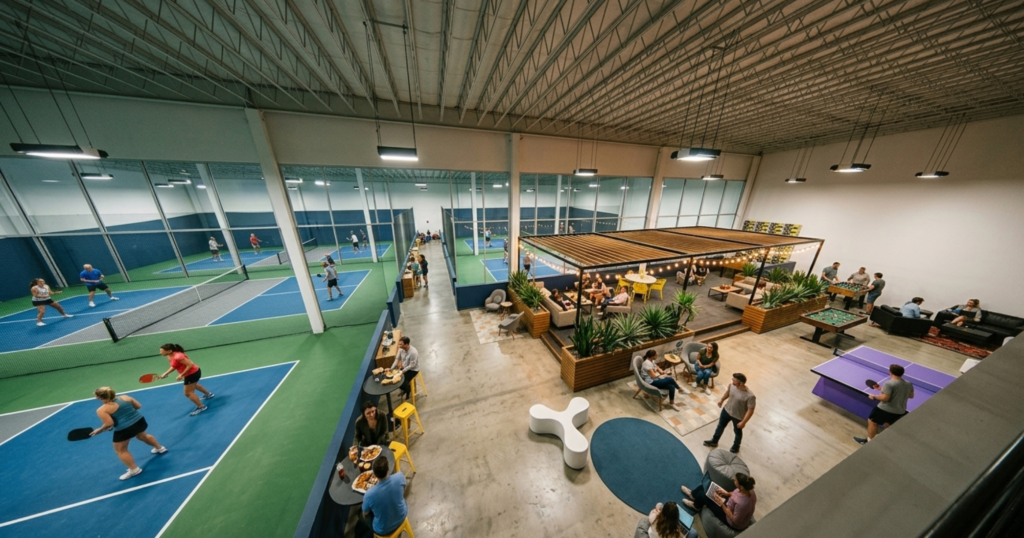
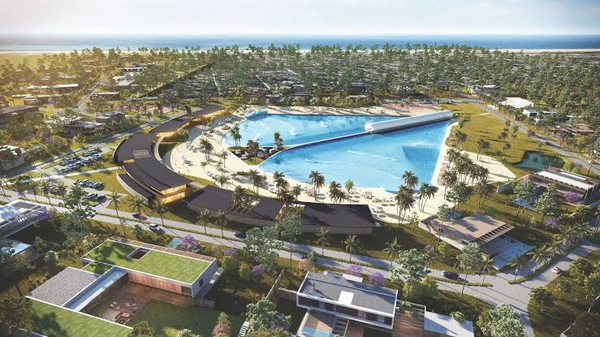
A central part of his work is creating Third Places, spaces that aren’t home or work, but community destinations where people gather, connect, and return regularly. Increasingly, these environments are becoming a key element of surf-anchored developments, blending recreation, dining, work, and social spaces into a single destination.
Ryan recently explored the concept in a TEDx Talk, and during day one of Surf Park Summit, he’ll share how developers can turn these ideas into successful projects—from early planning through opening day.
Surf Park Central spoke with him ahead of the event.
Surf Park Central: To kick it off, tell me in your own words about these activity-driven destinations.
Chris Ryan: When I think about the idea of a third place—the informal community that develops over time—that can be a free place like a beach or skate park, or a membership-based place like a climbing gym or surf park. These become ecosystems where people find mentors, friends, and long-term relationships through shared activities.
As someone who grew up climbing, skiing, and surfing, those activities were how I met all my friends and many of the people I learned from as a teenager. The activities were the catalyst, and everything else developed from there.
I like to think of the activity component of experiential real estate as the sugar that brings people in. Then the community, relationships, and all the other benefits grow out of that.
Today, it’s about creating ecosystems that give parents and kids reasons to visit these places. If you treat them well and offer programs and products that make sense, they’ll keep coming back. The community grows out of that repeated engagement rather than being the starting point.
Surf Park Central: Obviously there are a lot of community benefits, but why is it smart for a commercial real estate developer to focus on these concepts when building a surf park or another action-sports-related development?
Chris Ryan: There are entire publicly traded REITs focused solely on experiential real estate, so there’s real money in this space. There’s also a lot of data showing that people are increasingly willing to pay for experiences—whether that’s travel or activities—rather than simply products and services.
There’s strong evidence and investment supporting that trend. To me, it’s a different way of looking at metrics like repeat visitors, dwell time, and lifetime value. Those are the things that matter when you’re trying to get people to show up, come back, and come back frequently.
Many of the facilities I work on operate during off-peak hours, evenings, and weekends. You’re creating ecosystems within developments. Often, we’ll take a large development or underutilized real estate and add an attraction. Then other businesses—breweries, restaurants, retail, and more—grow around it and feed off one another.
Whether it’s a single building or a larger development, I think of them as ecosystems. The story you’re trying to tell will be different for every project, but the key questions are: What story are we telling, and who are we trying to attract? What are those people looking for?
That curation of a story—what you’re offering, how you’re doing it, the environment you’re creating, and how you’re treating people—is what helps create something where all the pieces reinforce one another.
Surf Park Central: What steps can a developer take to ensure they actually build that ecosystem? What’s the difference between simply designing amenities and creating something successful from planning through opening day?
Chris Ryan: As an architect, one of the biggest lessons I’ve learned over the last 10 to 15 years is how important it is to start with the numbers. My approach begins with goals and mindset. What are we actually trying to do, and why does it matter?
Every project eventually reaches a point where you have to decide what stays and what goes. That’s why first principles are so important. Today, with costs where they are, we’re stripping projects back as much as possible.
I believe you start with the narrative. I often compare it to a screenplay. At the beginning, we’re trying to figure out what story we’re telling. That story becomes the filter for every decision we make, including where we spend money.
Once we have that high-level story, we start applying numbers. What level of investment will this require, and what kind of return do we expect? It’s development financial planning—not a detailed pro forma or construction budget, but enough to understand the relationship between inputs and outputs.
That prevents us from drawing something that’s twice the available budget. This is all pre-design work. If the numbers balance, then it’s time to start drawing and creating visuals that help build support from landowners, investors, partners, or whoever else is involved.
What’s the story? What do the numbers look like? What does it look like visually? Together, those pieces create a compelling development package.
That’s usually what we produce for early-phase projects or RFPs. The screenplay analogy works because a small team can create something compelling that’s grounded in reality. It’s conceptual, but it’s informed by the market, the budget, and the opportunity.
Then, if we need more expertise—whether in surf parks, food and beverage, operations, or something else—we expand the team and keep refining the idea.
Surf Park Central: You mentioned that simply adding amenities doesn’t automatically create this type of destination. What are the biggest challenges developers face when trying to make these projects successful?
Chris Ryan: Cost is the biggest challenge. Since 2020 and 2021, construction costs have risen dramatically—30 to 40 percent in many cases. It’s a difficult environment.
When you compare those increases to consumer spending, the spending hasn’t kept pace. Membership fees and admission prices have gone up, but not enough to offset those cost increases.
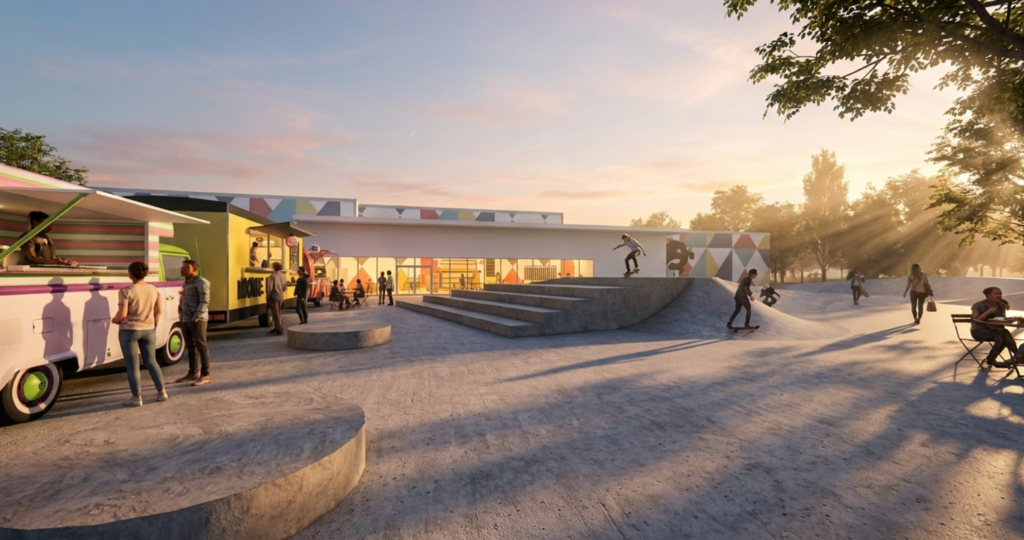
As a result, many projects today are smaller, phased, renovation-based, or hybrid developments. We’re trying to leverage existing assets and spend strategically so we can invest where it matters most.
Phasing has become incredibly important. Even small projects are often structured in stages. The goal is to get something open, demonstrate success, and then build from there rather than funding everything upfront.
The faster we can get doors open, the faster we can start layering assets and revenue streams on top of one another.
The second challenge is defining the narrative. It’s not enough to ask the community what they want. That’s one input, but not the only one.
The story often comes from the developer or owner—their experiences, vision, and perspective. I compare it to cooking. The ingredients may be similar to other projects, but the way they’re combined creates something unique.
That story is incredibly important because success isn’t simply about spending more money or building something bigger. It’s about creating something compelling that attracts people and makes sense financially.
Surf Park Central: We have seen these concepts in some of the newer surf park destinations, where there are restaurants, family-friendly activities, and things to do beyond surfing. For someone attending your presentation, what’s the biggest takeaway you hope they leave with?
Chris Ryan: I spent a decade developing climbing gyms around the country. Before that, I was a competitive climber. Climbing, skiing, and surfing have all had a huge impact on my life, but climbing in particular shaped who I became.
I competed nationally, moved to Colorado, traveled the world, and built much of my identity around those experiences. That perspective informs how I approach these projects.
I’m not the best surfer, but I love surfing and skateboarding. What I do understand is how these activities can shape people’s lives. The challenge is creating environments that are both authentic and financially viable.
My experience combines those activity-based places with architecture and development. Opening projects year after year teaches you many of the same lessons.
At the early stages, it’s always about moving as far as possible, as quickly as possible, with as little investment as necessary to determine whether an idea is viable. Even large companies approach projects that way.
Everything I do is focused on getting projects built—not just drawing them. Drawings are one tool among many. The goal is to create great places that are also strong businesses.
My work is focused on creating authentic environments that are also compelling businesses. I’m excited to share what I’ve learned about how to do that while avoiding wasted time, wasted money, and stalled projects.
I always say I’m here to build stuff, not draw stuff. That’s really what I hope to share.
Surf Park Central: Final question, is there anything else you’d like to share about the projects you’re working on or anything our audience would benefit from hearing?
Chris Ryan: One thing I often tell people is that this isn’t the hardest thing in the world to do. It’s not overly complicated.
The reason I do what I do is that I can help other architects and development teams. I’m rarely the architect of record. I’m usually working alongside different architects, builders, and owners.
It’s not about having some secret formula. In many ways, it’s the opposite. The concepts are simple on paper. The challenge is the nuance.
I compare it to a chess game. Depending on the situation, the landlord, the market, or the financing, you make different decisions. It’s an ongoing process of adapting and responding.
The value comes from experience, perspective, and having a clear vision of where you’re trying to go. Much of my work isn’t producing drawings—it’s building long-term relationships over multiple projects and helping clients develop ideas that fit both their goals and their business.
The process itself isn’t complicated. It’s the nuance of creating activity-based, third-place environments that makes it unique. That’s all I focus on.






You must be logged in to post a comment Login