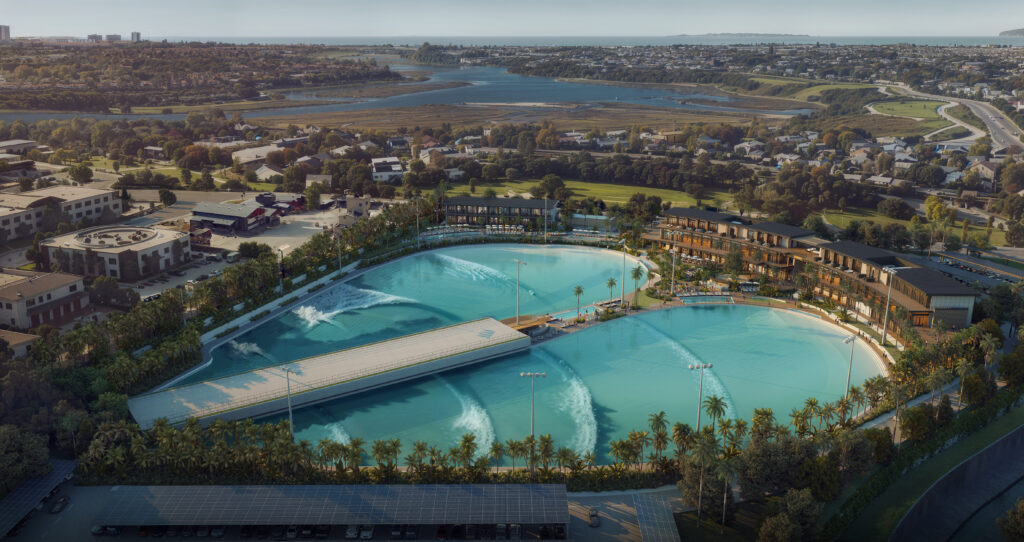
The start of any good surf park plan comes with a well-thought-out design. That’s what MVE + Partners says is essential. The award-winning architecture and master planning organization works in both the commercial and residential space. They’re now using their expertise in real estate, hospitality and entertainment projects to help Snug Harbor join the growing list of world-class surf park destinations.
Surf Park Central spoke with MVE’s principals Pieter Berger and Chase Rongé.
Surf Park Central: Let’s start by having you tell me a little about MVE.
Pieter Berger: We’re a firm with over half a century of design experience and intelligence. Our approach is defined by partnership, we try to leave ego at the table and be in it with our clients at every stage of a project, whether it’s housing, recreation, leisure, hospitality, or something as simple as a tenant improvement. It’s about creating a genuine partnership with whoever we’re working with to deliver the design narrative together.
We love construction and built work. Pretty pictures are something anyone can produce, but getting things delivered, boots on the ground, shovels in the ground, projects reaching market, that’s what we thrive on. We try to be reasonable at every stage of a project, and with half a century of experience, there’s a lot of knowledge to draw from as we think about how to move projects forward.
Surf Park Central: When it comes to surf parks, how is architectural planning really the backbone of any project? Obviously, it’s an early stage, but why is it so important for the overall finished product?
Berger: Planning is really the framework for success. Decisions made at the planning level can create massive swings in cost by the end of a project if you’re not careful.
I’m a big advocate of spending dollars where people actually experience them, where design becomes a kind of user interface. That’s why the planning and site-planning stage is so critical in the surf park world.
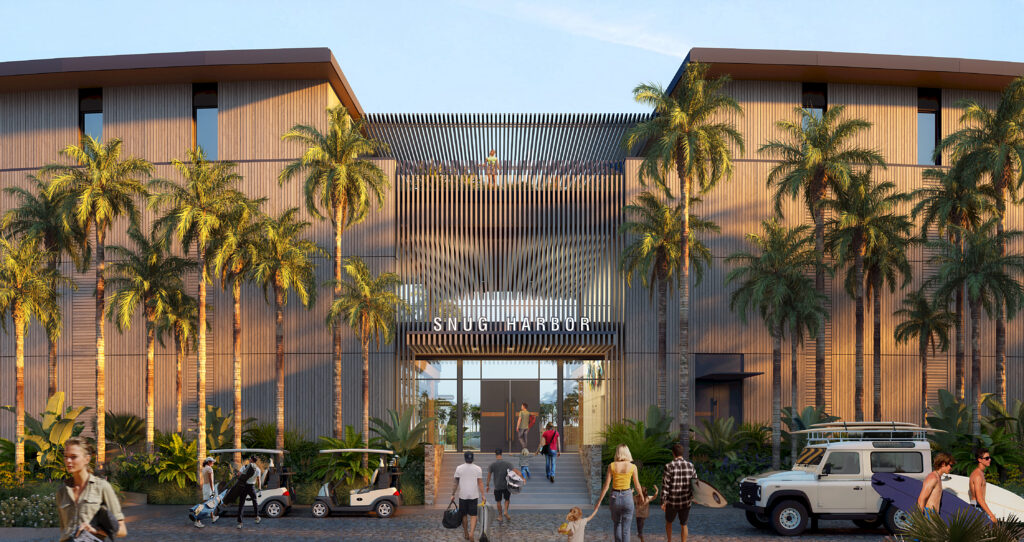
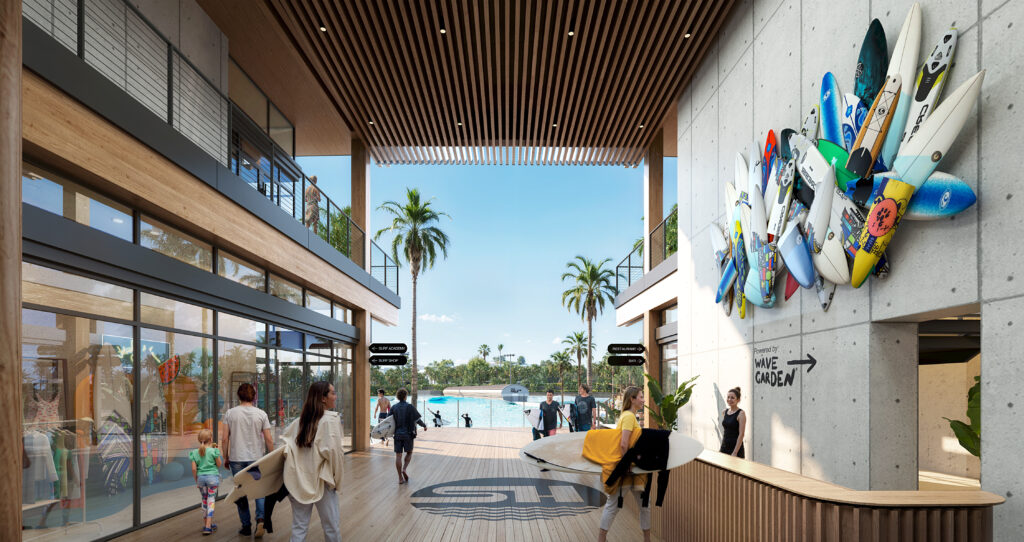
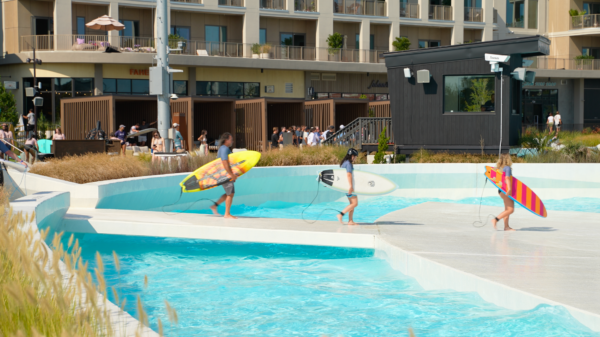
Thinking through the movement of people and flow is essential. You’re getting bodies in and out of a pool and surfboards in and out of a facility, and that’s not a small thing. It’s not uncommon for fifty people to show up at once for a session, each potentially carrying a board bag with three or four boards. You’ve got to move those people and that gear in a way that doesn’t feel like someone dropped their yard sale at your front door. The experience needs to feel elevated and measured.
A lot of that comes down to decisions made at the planning and site-layout level, and getting those right is critical to a project’s success.
Chase Rongé: Surf parks are generally a central part of the development, not the sole element of it. Understanding how all the components work together with the overall development is essential to the surf park’s success, both the park itself and the auxiliary functions layered around it.
Surf Park Central: One thing you hear a lot in the industry are the challenges. A lot of parks start off with big plans and big dreams, and then they’ve fallen apart. Can you talk a little bit about some of the unique challenges developers face with surf-anchored real estate, and how planning and design can help them overcome those challenges?
Berger: One of the biggest pieces of this, as I touched on earlier, is the movement of people. It’s not uncommon for an experienced surfer to show up with three or four boards. I’ll equate it to a Disneyland approach: when you walk into Disneyland, you hit Main Street, and that experience is purposeful, direct, and measured. A surf park needs the same discipline. It can’t turn into a scene of first-timers unloading boards and fumbling through waivers at the front door. Every part of how people enter and move through the space needs to be measured so the experience matches the goal from day one.
Alongside that is the reality of who’s surfing. You’ll have people fresh off a flight from the Midwest who’ve surfed once or twice on vacation, and you’ll have people who surf daily or several times a week. The design has to work for both profiles. Someone who surfs every day has a completely different towel-and-change routine than someone getting into a wetsuit for the first time in a decade, and it’s part of that first person’s culture and lifestyle in a way it isn’t for the other. Capturing all of that is a real challenge, and it means being deliberate about which experiences you’re designing for and which narratives you’re responding to.
Surf Park Central: One thing people always ask when someone announces a surf park is what wave technology they will use. It’s always a big focus on the surf lagoon, but when should a developer look beyond the surf lagoon toward the development they plan to build around it? At what point should they start planning for that larger-scale project?
Rongé: This is something you want to look at from the start. You look at all the components of the project and how they’ll work together, and as we said earlier, the lagoon is only one component of that.
You need to look not just at the scale and function of each component, but at how they operate together, especially since a surf park development is centered on a single focal point in a way other developments aren’t. Every other piece of the development wants visual or physical access to that lagoon, so how those components interact with it is critical.
Compare that to a country club, where you can spread out your access points and circulation between amenities. You don’t have that same flexibility with a surf park. You’re working with a finite area.
Berger: That’s a great point, and it’s twofold. One is how much developable area you’re working with. Atlantic Park is fortunate to have several blocks to work with, mixed-use multifamily, an event venue, retail components, the surf park, and a hospitality piece with a roughly 20-key hotel built in. That mix is what makes the pro forma work from a bigger, master-plan standpoint.
The second piece is what Chase just mentioned. When I go to the beach with my family, my wife wants to do one thing, my two-year-old wants to do another, my five-year-old wants something else, and my eight- and ten-year-olds want to surf and boogie board. It’s not purely about surfing, and that’s critical. Revel Surf Park is a great case study in that: it’s not just about the wave, there’s cliff jumping, a FlowRider-style standing wave, and different programming for different people.
I don’t love saying it’s a mousetrap for getting people to spend money, but honestly, it is. The more you get people engaged across different activities, your spouse spending on food and beverage, your kids engaged at their own level, even down to a wristband tied to a credit card so kids can independently grab a snack, the more it all adds up.
That’s one of the hardest parts of this industry to think through, because right now we’re all obsessed with the wave and the technology behind it. But it’s everything else that turns a single session into someone booking three sessions and building a day around it with their family. That’s where it gets fun.

Surf Park Central: What are some of the overlooked parts of designing surf-anchored real estate? What have you seen in the industry so far that people aren’t thinking about when they start this process?
Berger: Politics and education. There’s a political process you need to get through to get land entitled, and in some surfing communities, that education is easier because people already have a pulse on the market and know there’s a trend toward wave pools. I can’t imagine doing this in a place like Arkansas, where surfing is so foreign that you first have to educate a city on why this is a great use of land. Beyond private ownership, even navigating code requires that same level of education.
I think it’s important to approach this industry the way you’d approach any other type of development: professionally, with the right land-use attorneys and consultants who understand the political landscape. The goal at the outset isn’t to sell the stoke and the wave. It’s to get the project approved. Once we’re into development and construction, that’s when we can really start selling the stoke.
It’s a balance, being professional about navigating the process while educating people enough to understand what this really is and how justifiable it is as a real estate endeavor. The numbers prove it.
Rongé: We get so excited about the concept of the wave pool, the design, concept, and experience we’ve built, that it’s easy to overlook how the full development is being perceived by the community where it is being built. When we conceptualize these developments we want to make sure we are considering how the community at large going to receive it.
Thinking through that early allows for a much better strategy from the beginning, instead of being reactive once you’re already in entitlement or permitting and discover there’s public resistance. You want to get in front of that and educate the public and build positive energy and momentum behind what these surf parks are.
Surf Park Central: Recently, we’ve seen a lot more surf parks come together, making it from initial design to finished product. What are some things the industry is doing better now to help these projects make it to completion? What has changed that’s really helping these become a stable part of the modern real estate market?
Berger: Time and data are huge. Getting proof of concept beyond just people showing up, to actual numbers and measurables, is what helps in the world of equity and getting investors. That means reaching not just people who understand surfing and its outlook, but purely black-and-white real estate investors pulling from different equity sources to fund these projects.
Now that we’ve had a series of these parks, regardless of technology or concept, real measurables are starting to emerge. That’s twofold: it creates lessons learned about what to do and what not to do, and it shows an evolution of technology happening almost in real time across these different groups, constantly updating bathymetry and shoreline conditions, whether that’s Wavegarden’s modular approach or other groups adjusting pool size and configuration.
The more that translates into hard numbers, the more you’ll see investors enter this space who have no personal connection to surfing. It’s not a passion project for them, it’s a good real estate deal. That’s part of what I love about where this industry is right now. It’s a bit of a rat race, everyone’s trying to build the perfect experience, but a rising tide lifts all boats. A successful park in one market helps parks elsewhere. The more successes we see, the better it is for everyone.
Rongé: The concept behind the surf park is evolving too. We’re seeing this new-age country club model position itself around the surf park, and this new generation really relates to that.
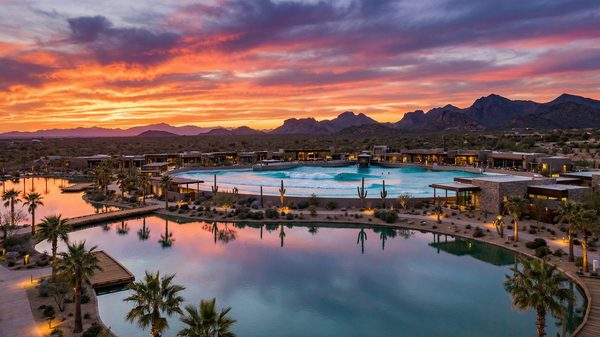
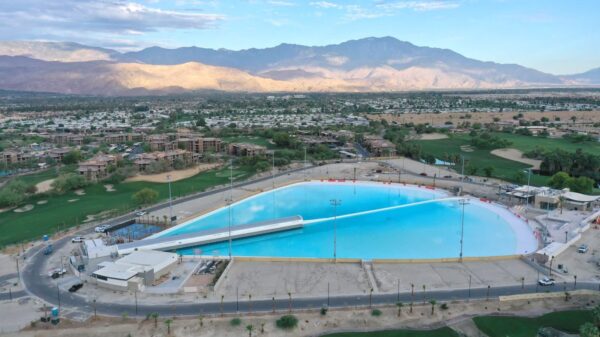
Another clear indicator of success is seeing multiple surf parks in the same general area. We’re seeing that in Southern California now, with a second surf park recently opening in the Palm Springs area. That tells you the market is supporting the existing park well enough to support a second one, which is a really telling sign of where this industry is headed.
Surf Park Central: Do you have any other thoughts or anything you want to add to this topic, or anything else you think is worth sharing?
Berger: This is fun and incredibly entertaining to work on. Chase and I have known each other for a while, and we’ve been lucky enough to go on surf trips together and experience places like Surf Ranch, where we were a couple of weeks ago, and we’ve surfed back east at Atlantic Park. It’s wild to see all of this unfold, and it’s not just us. A lot of people in this space have great insights, and it’s hard not to be passionate about it.
It combines so many interesting things, experientially and architecturally, down to the actual buildings that support these spaces. These parks have the opportunity to become modern-day sports arenas where it’s not just fans viewing an experience, it’s hospitality, multifamily, and entertainment all benefiting together. I like the idea that the beach can exist anywhere, it doesn’t have to be a purely coastal experience.
I’m excited to see what this does in the long term, both for surf culture and for brand identity and growth. Here in Orange County, we’ve watched local brands like Quiksilver struggle after their peak, and the industry has had a rough stretch. But now, kids and talent are going to emerge from the most unexpected places. Interest in surfing, gear, and apparel is going to reach markets that used to produce, at best, a one-time buyer from someone on vacation. Now there’s a surf park there instead, and that community becomes genuinely entrenched in the culture, looking for new boards, new gear, and new brands.
It’s fascinating to watch, and exciting to think about how it’s going to lift everything moving forward.







You must be logged in to post a comment Login