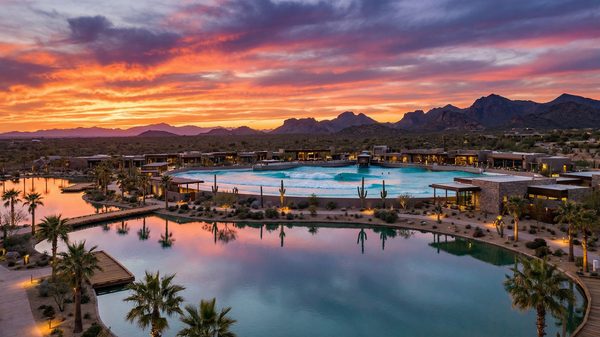
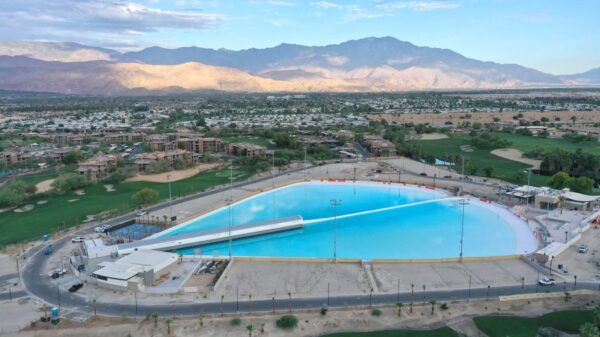
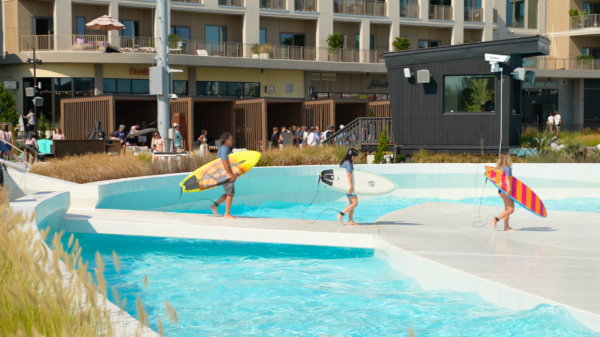
Surf parks are creating a new category of recreational real estate, and the opportunity extends well beyond the waves. In his latest report, The Paramount Surf Report: Surf Park Real Estate Conditions – North America, 3Q2026, Chris Dorociak, President and Founder of Paramount Economics, examines the market taking shape across the United States and Mexico.
Drawing on more than two decades of real estate research and strategic advisory experience, Dorociak explores everything from surf park business models and pricing structures to the growing impact these destinations are having on surrounding residential property values. His research identifies substantial real estate premiums around surf parks and highlights an opportunity for developers and investors to capture value beyond park operations.
Surf Park Central spoke with Dorociak about the report’s biggest findings, the industry’s growth potential, and why developers should be thinking about the real estate surrounding their surf parks just as carefully as the waves themselves.
Read the report by subscribing to INSIDERS.
Surf Park Central: Tell me about your background and what attracted you to the surf-anchored real estate industry.
Chris Dorociak: Personally, I live in San Diego and love to surf. Professionally, I’ve spent more than two decades in real estate research and strategic advisory. I founded Paramount Economics to help groups maximize real estate opportunities in lifestyle-driven destinations. These include beaches, ski areas, golf courses, and master-planned communities. I study the market and the site to guide product mix, pricing, and sales targets.
When new surf parks opened, they naturally caught my attention. Listening to surf park developers, they faced the same real estate, placemaking, and strategic challenges as golf and ski destinations. My love of surfing and professional background align in a new industry. That’s exciting. I can use research methods from experiential real estate to benefit surf-anchored real estate.

Surf Park Central: Tell me about the report and its biggest takeaways for the surf park industry.
Chris Dorociak: Two major takeaways really define the landscape right now. First, the market is actively segmenting just like golf and ski did. We are seeing everything from fully daily-fee public venues to ultra-exclusive private clubs, as well as hybrid models. Second, the residential real estate built adjacent to surf parks commands substantial pricing premiums over neighboring luxury properties. Surf parks represent significant capital investments, and my goal with this report is to make sure the groups creating them have the right strategy to benefit from the real estate value they create.
Surf Park Central: Who should be reading this report, and what decisions can it help them make?
Chris Dorociak: I called this a “surf report” as a nod to the early morning ritual of checking the waves before going surfing. In that same spirit, this report provides a solid description of current real estate conditions among surf parks. The report is for anyone interested in the fundamentals of surf parks as they exist today in the US and Mexico. It is for existing and prospective investors, commercial and residential developers, municipal stakeholders, and others simply curious about the industry. Groups may be considering funding or creating a new surf park. The report is a starting point for more site-specific feasibility work.
Surf Park Central: The report identifies surf parks as North America’s fastest-growing recreational real estate amenity in percentage terms. What data supports that finding, and what does it tell us about the industry’s growth?
Chris Dorociak: Tracking supply metrics across recreational asset classes is a routine part of my advisory practice. Data from the National Ski Areas Association and the National Golf Foundation show that net supply in those mature (but fun!) sectors is essentially flat. Ski resort development is rare, and golf operates on a replacement basis where premier new courses open, but older, distressed courses shut down.
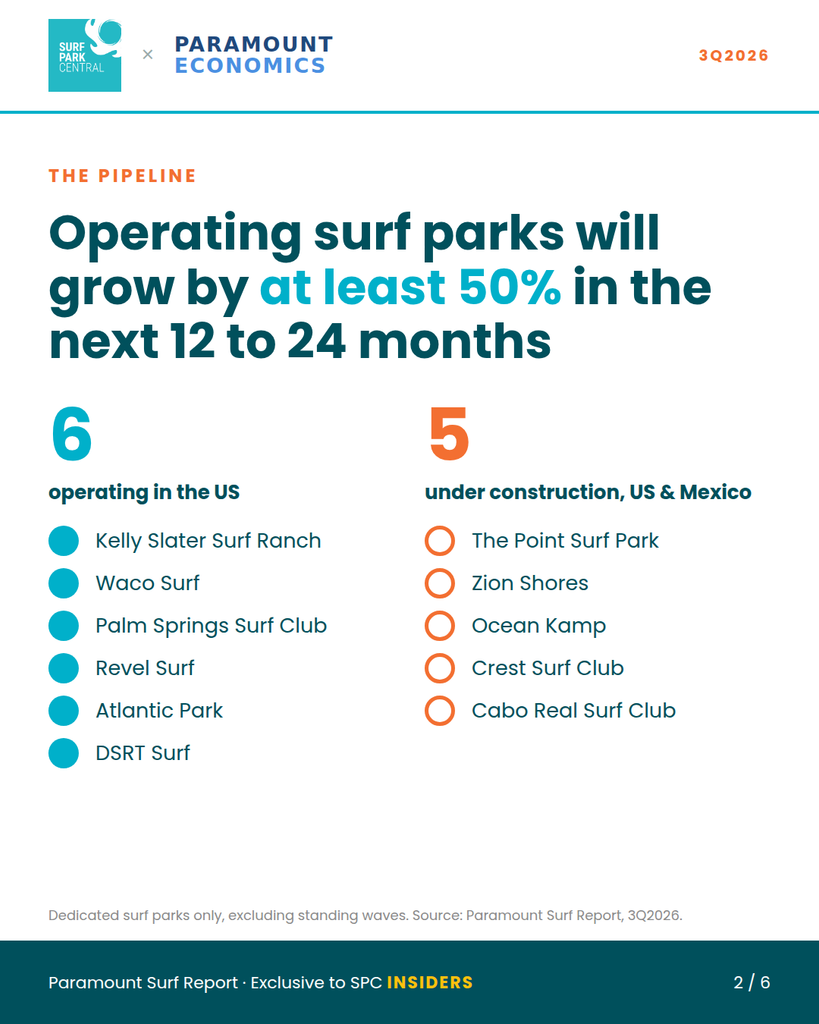
Surf parks, by contrast, are scaling up from a recent baseline of near zero. You can still count the operational facilities in North America on one, now two hands, which means every delivery represents massive percentage growth. Surf parks are a fresh experiential category unlocked by modern engineering. We are at the beginning of a long-term development cycle.
Surf Park Central: What impact are surf parks having on nearby residential real estate values, and what’s driving that impact?
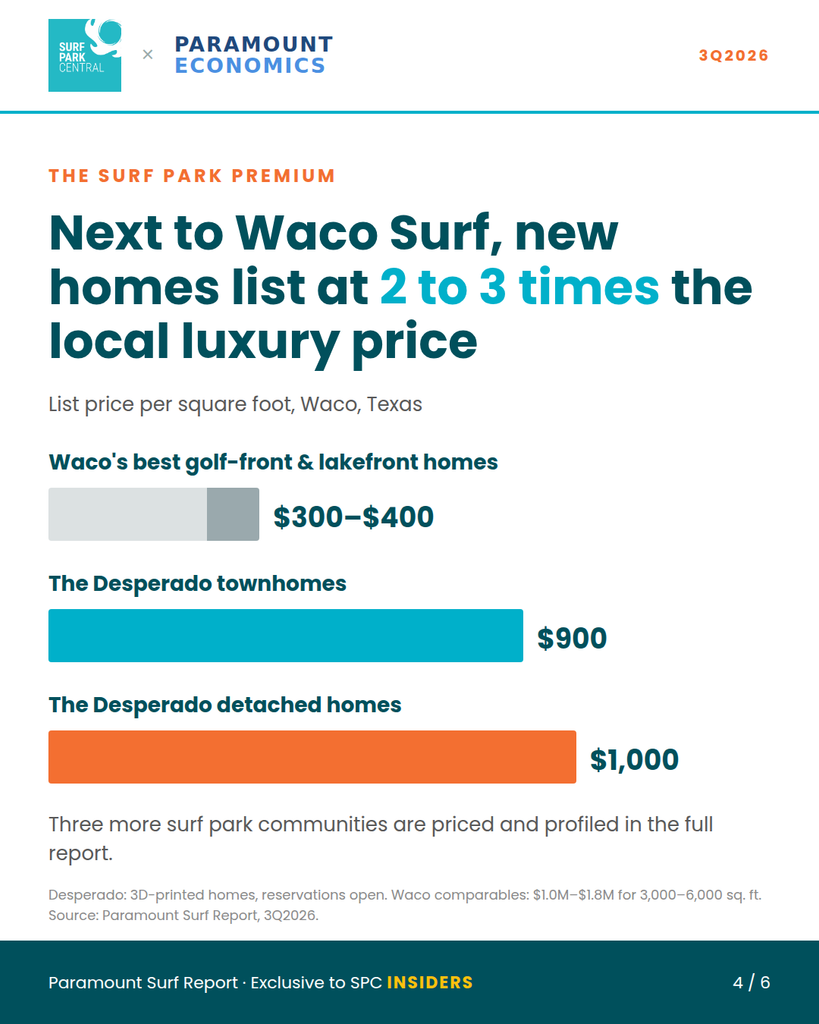
Chris Dorociak: The data confirms that surf parks add substantial value to surrounding real estate. Among the four residential-integrated projects in the report, Atlantic Park, The Desperado, Zion Shores, and Cabo Real Surf Club, pricing premiums range from 20% to well over 50% compared to local luxury comps. That lift happens for a few reasons. There’s the surfing component, with high-quality, customizable waves, which becomes highly addictive (trust me!). There’s the attractive sight and sound of moving water. Finally, the lifestyle around surfing also aligns with the health and wellness priorities of our culture.
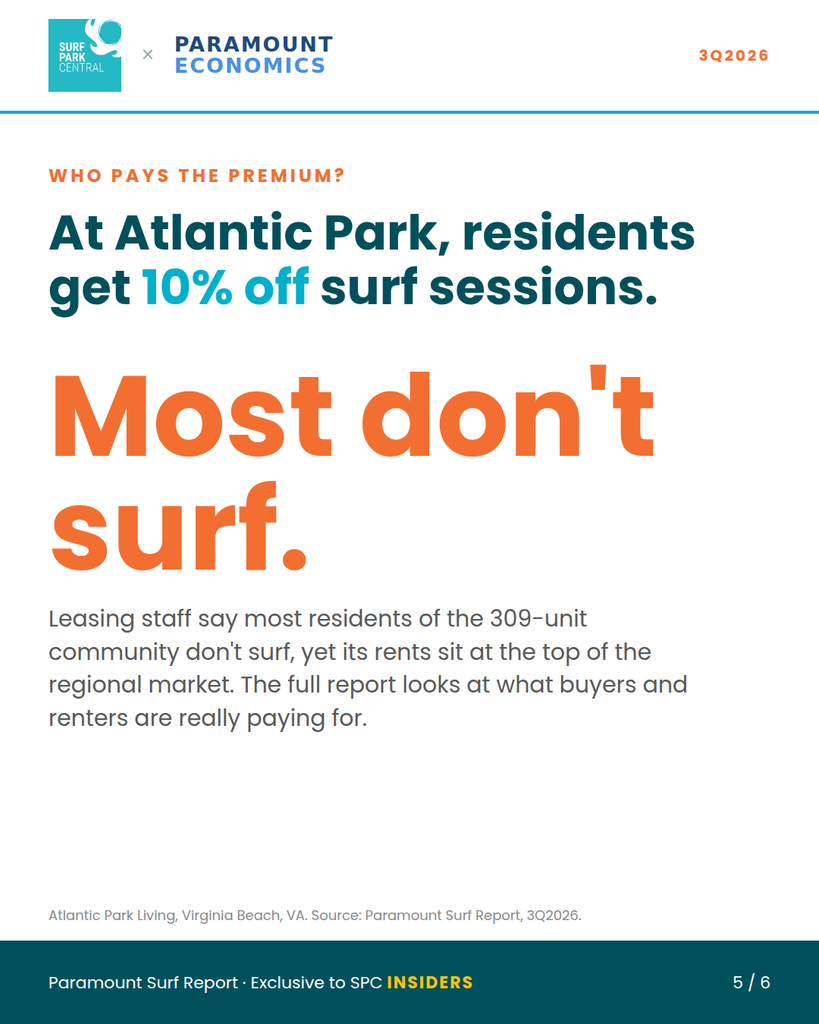
Surf Park Central: The report highlights an interesting finding at Atlantic Park: residents receive a discount on surfing, but leasing staff says most don’t surf. What does this tell us about the appeal of surf-anchored real estate, and how should developers and operators use that insight?
Chris Dorociak: It sounds like a total paradox, but it also happens in golf, where residents on many courses rarely if ever pick up a set of clubs. They buy into the setting, the community, and the lifestyle. Even for non-surfers, Atlantic Park’s lagoon is a mesmerizing focal point. I remember watching the Rip Curl Pro at Bells Beach back in 2006. The natural cliff amphitheater was electric, with world-class surfing roughly a quarter mile away. Now put an event right below someone’s balcony, and it’s a wild sight. Surfing becomes active recreation for some and visual art for others. Surf parks should create an excellent surfing environment while prioritizing views, connectivity, and vibes for non-surfers.
Surf Park Central: Beyond the headline findings, what surprised you most as you gathered and analyzed the data?
Chris Dorociak: The magnitude of the real estate premiums was definitely an eye-opener. The Desperado commands over double the price per square foot of its local luxury market and Cabo Real Surf Club creates top-tier values on an inland site. I was surprised by how many other development teams were laser focused on wave tech and park operations, with less strategic emphasis on real estate. Operations are vital, but a surf park also transforms the real estate around it. On a personal level, I am so impressed by the founders in this sector. These are true pioneers, brilliant engineers, core surfers, and often combinations of all three. They’re fun to talk to.
Surf Park Central: If you were advising a developer planning a residential component around a surf park today, what’s the one mistake you’d warn them against?
Chris Dorociak: The single biggest mistake is treating the surf park strictly as a standalone operational business without factoring in surrounding or neighboring real estate. Building and engineering a surf park is complex, expensive, and time consuming. If the park operates profitably based on its operations, that is fantastic. Surf park creators should capture the upside around the perimeter. If you fail to optimize real estate programming and premiums, you leave opportunities behind. These aspects can benefit the surf park and reduce the operating risks.
Surf Park Central: Is there anything else you’d like our audience to know about the report, or any key takeaway we haven’t covered?
Chris Dorociak: I view this research as a surf report. Much like ocean waves, conditions change continuously, which is why I update the data on a quarterly basis to track new parks, pricing shifts, and development trends across the United States and Mexico. We have established a baseline of quantifiable data, but every site is unique, with nuances impacting real estate strategy. As the surf park industry matures, data resources will grow. I welcome conversations with developers, investors, and operators who have questions about this research or want to talk about new surf-anchored real estate.
The report is now available exclusively to INSIDERS members. Subscribe now.