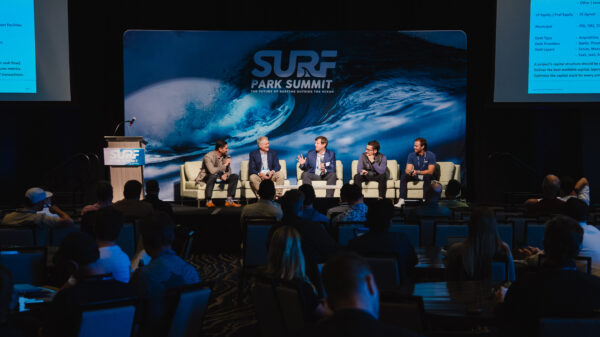
An analysis of Eduardo’s presentation at Surf Park Summit 2025 by Jess Ponting
There is a tendency, when interpreting presentations like Eduardo Grinberg’s, to reduce them into clean, digestible business insights. However, doing so risks stripping away the central premise of his argument: that emotion is not peripheral to the surf park business model—it is foundational to it. Beneath the discussion of premium memberships, curated experiences, and evolving development strategies lies a deeper reframing of what surf parks are actually producing. In Grinberg’s view, the core product is not the wave itself, but the meaning and connection that forms around it.
From Wave Pools to Meaningful Places
Grinberg situates his perspective within a familiar origin story—early fascination with the ocean, exposure to emerging wave technologies, and a gradual progression into the surf park industry through entrepreneurship and investment. However, the critical inflection point in his narrative is not technological adoption, but conceptual realization. He identifies the central challenge of surf park development as one of translation: bridging two fundamentally different domains. On one side is surf culture, characterized by emotion, intuition, and experiential value. On the other side is the world of real estate, hospitality, and finance, defined by structure, predictability, and quantitative analysis.
This tension is not unique to surf parks, but it is particularly acute in this industry due to the inherently experiential nature of surfing. Projects that lean too heavily toward emotional authenticity risk lacking financial rigor, while those that prioritize structure and efficiency often dilute the experiential quality that makes surfing compelling. Grinberg’s key insight is that value emerges not from choosing between these domains, but from effectively integrating them.
Strategic Insight: The most resilient surf park developments will be those that successfully align experiential authenticity with financial structure. This requires intentional design processes that incorporate both user experience and operational performance from the outset, rather than treating them as sequential considerations.
From Asset to Ecosystem
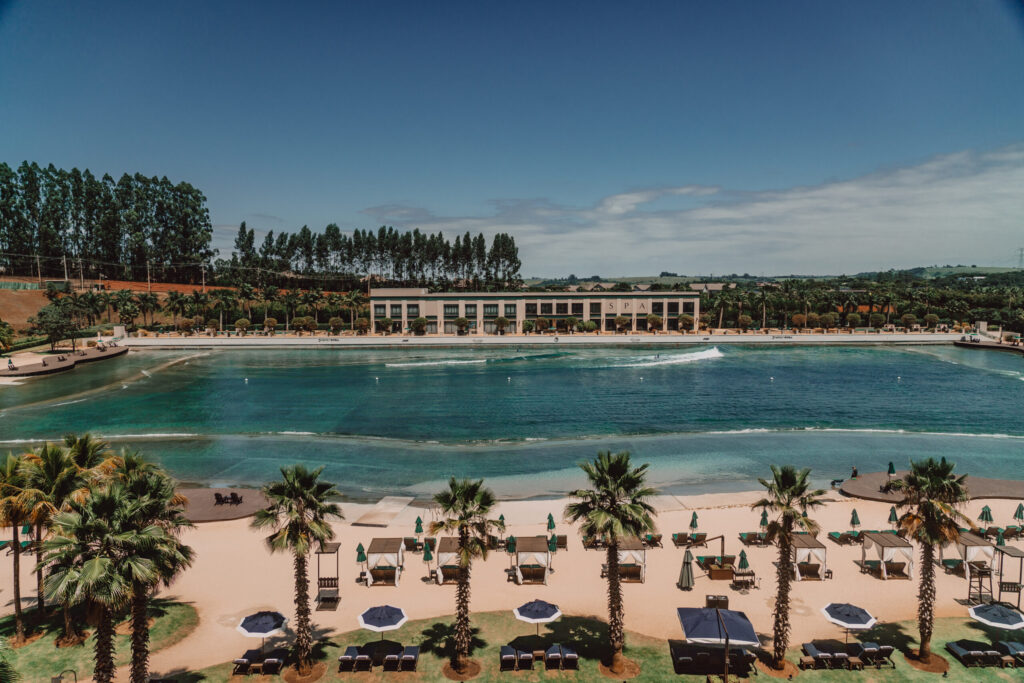
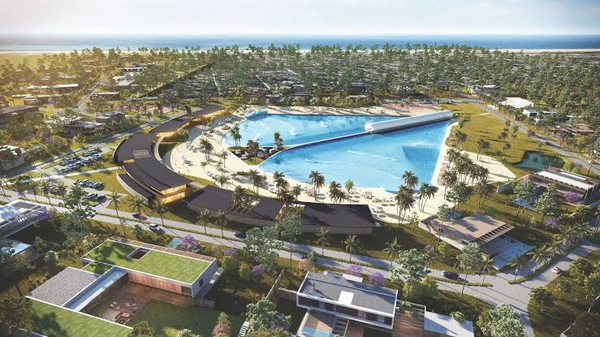
A central theme in Grinberg’s presentation is the evolution of the surf park from a standalone asset into a broader ecosystem. In the case of JHSF’s Boa Vista and São Paulo projects, the surf lagoon is positioned as one component within a larger network of amenities that includes wellness programming, hospitality, residential elements, and social spaces. This integrated model shifts the fundamental question from how to monetize wave sessions to how to create an environment that fosters sustained engagement and belonging.
This distinction has important implications for both revenue generation and long-term value creation. While traditional models emphasize utilization rates and pricing strategies for surf sessions, the ecosystem approach expands the value proposition to include ancillary spending, extended dwell time, and increased customer lifetime value. More importantly, it reframes the surf park as a place rather than a product.
Strategic Insight: Developers should evaluate surf parks not solely as operational assets, but as anchors within a mixed-use ecosystem. The financial viability of the project may depend as much on the performance of surrounding uses—hospitality, residential, wellness—as on the surf operation itself.
The “Triple Win” Framework
Grinberg introduces the concept of a “triple win balance,” structured around three stakeholders: members, the club, and partners. The sequencing of these priorities is deliberate. By placing members first, the model emphasizes the primacy of user experience as the driver of all subsequent value. A strong member experience enhances the attractiveness and performance of the club, which in turn generates returns for partners and investors.
This framework challenges conventional approaches that prioritize financial outcomes or investor returns at the outset. Instead, it suggests that sustainable financial performance is a byproduct of delivering meaningful experiences. While this may appear intuitive, it requires disciplined execution, particularly when short-term financial pressures conflict with long-term experiential goals.
Strategic Insight: Investment strategies should incorporate metrics that capture experiential quality and member satisfaction, not just financial performance. Long-term returns are likely to correlate more strongly with retention, engagement, and community formation than with short-term revenue maximization.
Premium Positioning and Experience Curation
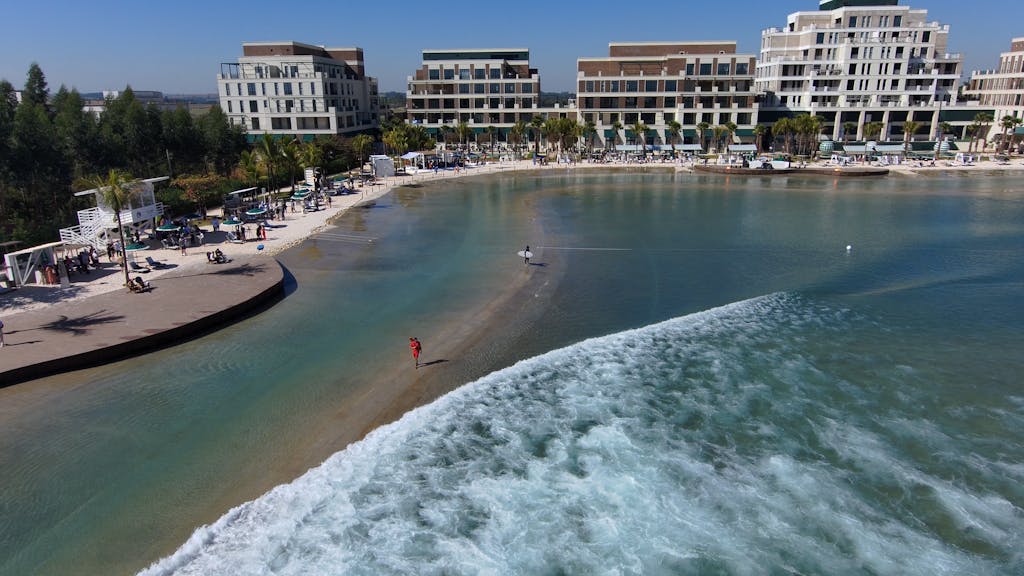
The JHSF model is explicitly positioned within the premium segment of the market, but Grinberg’s framing of exclusivity extends beyond pricing. Rather than functioning solely as a barrier to entry, exclusivity is used as a mechanism for curating experience. This includes the design of the physical environment, the selection of programming, and the cultivation of a specific community dynamic.
The emphasis on coherence is particularly notable. In an experience-driven environment, inconsistencies—whether operational, cultural, or aesthetic—are immediately perceptible to users. As a result, maintaining alignment across all elements of the offering becomes critical. This places significant demands on management, as the product extends beyond physical infrastructure to encompass service quality, brand identity, and social dynamics.
Strategic Insight: Premium surf park models must be managed as holistic experience platforms rather than discrete service offerings. Operational excellence must extend beyond wave delivery to include service design, brand consistency, and community curation.
Technology as an Enabler, Not a Differentiator
Although wave technology remains a central component of any surf park, Grinberg’s discussion suggests that it is increasingly becoming a baseline requirement rather than a source of competitive advantage. JHSF evaluated multiple leading technologies before selecting a partner, but the decision criteria extended beyond wave quality to include alignment with the broader vision of the project.
This reflects a broader trend within the industry as wave technologies mature. Differences in performance, reliability, and cost will continue to matter, but they are unlikely to provide sustained differentiation in isolation. Instead, competitive advantage will increasingly derive from how technology is integrated into the overall user experience.
Strategic Insight: Developers should treat wave technology as a critical enabler of the experience, but not as the primary source of differentiation. Strategic focus should shift toward how the technology is embedded within a broader ecosystem that enhances user engagement.
Community as the Core Product
Perhaps the most significant theme in Grinberg’s presentation is the role of community. The examples he provides—multi-generational participation, personal transformation, and emotional connection—illustrate that the value of the surf park extends beyond individual sessions. The surf environment becomes a platform for social interaction, identity formation, and shared experience.
This has important implications for both design and operations. Physical layouts must facilitate interaction and visibility, while programming must encourage participation across different user segments. The goal is not simply to attract users, but to integrate them into a community that sustains engagement over time.
Strategic Insight: Community formation should be treated as a core objective of surf park development. Design, programming, and operations should be aligned to encourage interaction, repeat visitation, and a sense of belonging, which in turn drives long-term value.
The “Aloha Business” Philosophy
Grinberg concludes with the concept of the “Aloha business,” which emphasizes the integration of innovation and human experience. While the terminology is informal, the underlying principle is consistent with broader trends in hospitality and experience-driven industries: that value is increasingly derived from intangible outcomes such as well-being, identity, and emotional connection.
This perspective challenges traditional performance metrics. Financial returns remain essential, but they are positioned as a consequence of delivering meaningful experiences rather than the sole objective. This approach aligns with the growing emphasis on experiential consumption, particularly in sectors related to wellness and lifestyle.
Strategic Insight: Surf park developers should consider incorporating broader performance metrics that capture experiential and social impact. While these may be more difficult to quantify, they are likely to be critical drivers of long-term differentiation and financial performance.
Implications for the Surf Park Industry
The model presented by JHSF represents one approach within a diverse and evolving industry. Public-access parks, pay-per-session facilities, and hybrid models will continue to coexist, each serving different market segments. However, the themes emerging from this presentation suggest a broader shift in how surf parks are conceptualized and developed.
There is a movement away from viewing surf parks as isolated attractions and toward understanding them as integrated destinations. This shift entails a corresponding change in business models, from transactional to relational, and from activity-based to lifestyle-oriented. As the industry matures, projects that successfully navigate this transition are likely to set new benchmarks for performance and user engagement.
Strategic Insight: The next phase of industry growth will be defined by the ability to integrate surf parks into broader lifestyle and real estate ecosystems. Developers who can align physical design, operational strategy, and community-building efforts will be best positioned to capture long-term value.
Conclusion
Grinberg’s central argument can be distilled into a single proposition: surf parks are not fundamentally in the business of selling waves, but in the business of creating meaningful experiences. This reframing has significant implications for how projects are designed, financed, and operated. It suggests that the most successful developments will be those that move beyond optimizing technical performance and instead focus on cultivating environments that foster connection, identity, and belonging.
While this approach introduces additional complexity, it also expands the potential of the surf park as an asset class. By aligning emotional engagement with financial performance, developers can create projects that are not only economically viable but also culturally and socially impactful.







You must be logged in to post a comment Login